
International Data Transfers & UK GDPR Compliance
Moving personal data between countries sounds straightforward at the start. Then you actually look at what actually has to happen and understand it is far more complex than you originally thought.
We help businesses handle international data transfers properly under UK GDPR, whether that’s UK to US or more complex global setups.
Making Sense of International Data Transfers
Most businesses we speak to do not have personal data sitting in just one place. They have multiple data sets moving between systems, providers, and countries. Sometimes that is intentional, sometimes it is just how data processing flows have ended up over a period of time.
Either way, once the personal data of UK based data subjects is involved, UK privacy legislation including UK GDPR comes into play. And that is where things tend to get a little bit grey and murky. Transparency is harder to keep a grasp of.
It is not always obvious:
- where your personal data is going;
- who is responsible at each stage;
- or whether what you have got in place is actually enough, from an information governance framework perspective.
You might have a rough idea. You might even have some documentation. But there is often a bit of uncertainty sitting underneath it, which in turn is a ‘risk’ to the organisation.
That is usually when people come to us.
We look at how your personal data moves in the real world, who is involved, and where the risks are. Then we help you put the right structure around it so you can carry on running your business without constantly wondering if something is going to come back and bite you.
Even if not legally mandated, many organisations choose to appoint a Certified Data Protection Officer voluntarily to enhance their data protection practices and demonstrate their commitment to privacy. They see the DPO as a crucial part of the senior leadership team and a worthwhile investment, as they add value in so many ways, and reassure clients, colleagues, prospects, and suppliers alike.
A recent example
We were approached by a US-based company that wanted to sell into the UK.
Nothing unusual there. Happens all the time.
Their setup was fairly typical as well. UK customers order a test kit, send it back using a UK courier, and the samples are analysed in a lab in the US.
Simple enough – until you follow the data.
You have got personal data being collected and processed in the UK, handled by a third party, transferred overseas, processed by multiple third parties in the US, and then coming back again as part of the results. Different organisations are involved at each step, all with their own role to play.
That is the kind of situation where it is very easy to assume everything is fine, without anyone actually checking how all the data processing fits together.
They came to us because they wanted a straight answer. Not a theoretical one – a practical one. Could they do what they were planning to do? And if so, what did they need in place to do it properly?
So we worked through it with them.
We mapped out the data flows properly, looked at where the risks sat, and put the right safeguards and documentation in place to support it. We also helped them deal with the UK-specific requirements that come with handling UK personal data as a non-UK business.
No overcomplication. No unnecessary extras. Just making sure the setup worked and stood up to scrutiny.
That’s typically how these projects go.
Where international data transfers tend to get complicated
Most issues with international data transfers do not come from one big mistake. They come from a series of small assumptions.
Things like:
- assuming a supplier has “sorted GDPR” on their side;
- not being completely clear on who is acting as a data controller or data processor;
- personal data moving through more places than originally expected;
- or data transfers happening without anyone really documenting them properly.
Individually, none of these feel like a major issue. Put them together, and the risk matrix increases dramatically.
If you are dealing with multiple countries – whether that’s the US, Australia, South Africa, a country in the EU, or anywhere else – those grey areas tend to multiply and quickly.
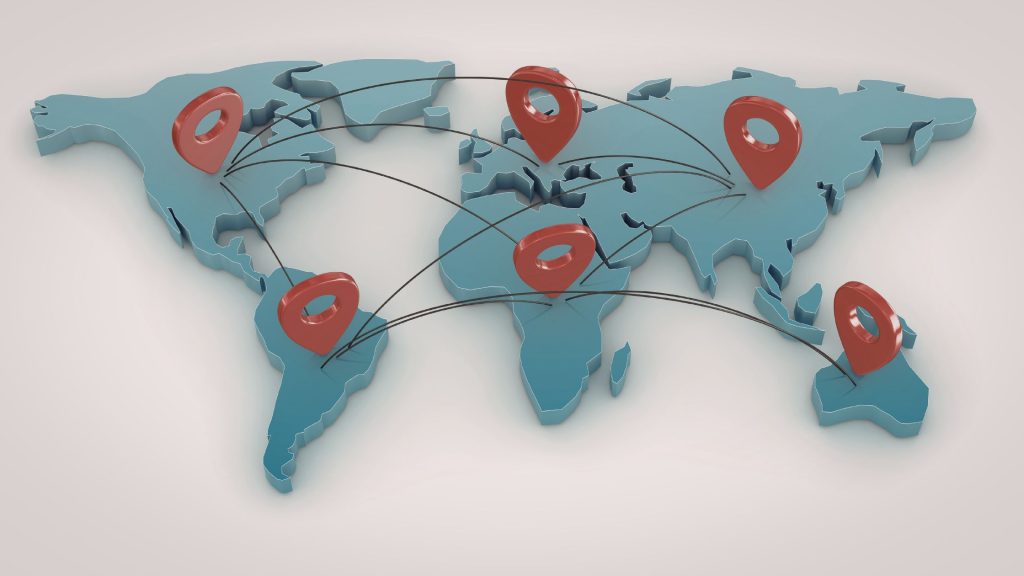
How We Help
We are not here to drown you in privacy regulation. We are here to make sure what you are currently doing works and is compliant.
That usually involves getting a clear picture of your personal data flows first, because without that, everything else is guesswork. From there, we look at what needs tightening up – whether that is the way data transfers are structured, the supporting privacy documentation behind them, or the roles and responsibilities between the parties involved.
Some clients just need a sense-check and a few adjustments. Others need things building out properly from the ground up. Either way, the aim is the same: to give you clarity, fix the gaps, and leave you with something that actually reflects how your business operates.
Is this something you need to worry about?
If you are moving personal data across borders in any way, it is worth checking.
That does not mean you have got a problem. But it does mean there is a good chance there are things you have not looked at in detail — simply because most businesses have not had the experience or had a reason to until now.
And it is a lot easier to deal with it before it becomes an issue than after.


Want a straight answer?
If you are not sure where you stand, we can take a look.
No overcomplicated audits. No drawn-out process.
Just a clear view of what’s going on and what, if anything, needs to change.
International Data Transfer FAQs
Yes - if you’re handling UK personal data in any way, UK GDPR can still apply to you.
Where your business is based matters less than where the data comes from and who it relates to.
Not necessarily.
A lot of businesses assume their suppliers have “sorted GDPR” on their side, but that does not automatically make your setup compliant. You are still responsible for how personal data is being processed and transferred overall.
In simple terms, it is when personal data moves from the UK to another country - either directly or via a third party.
That could be something obvious, such as sending personal data to a US provider, or less obvious, such as using software where the personal data is hosted overseas.
No - if anything, smaller businesses are more likely to have privacy and risk gaps because things have grown organically.
It is very common to have personal data moving across borders without anyone having fully mapped it out.
It depends on the situation, but it can lead to regulatory issues, complaints, or being told to stop certain processing activities.
In practice, most problems come from things not being properly understood or documented, which is usually fixable once it is identified.
Not always.
Sometimes it is a case of reviewing what you have already got and tightening it up. Other times, it makes sense to go a bit deeper.
We will tell you which it is - we are not here to sell you more than you need.
Yes, and that is usually where we get involved.
Once you have got personal data moving between different countries and providers, things get more complex, and that is where having someone properly map it out and structure it makes a big difference.